
LIVING IN A MACHINE: LE CORBUSIER'S HOUSING UNIT
A building shaped in a particular context
After the Second World War, the process of reconstruction has begun in France. Modest families were now
looking for
modern and comfortable housing.
The Cité
Radieuse was one of the solutions to this need.
Common services and equipment were made available to the inhabitants, in a pleasant living environment.
With this building, Le Corbusier put community life at the center.
Le Corbusier, a radical architect
Who is he?
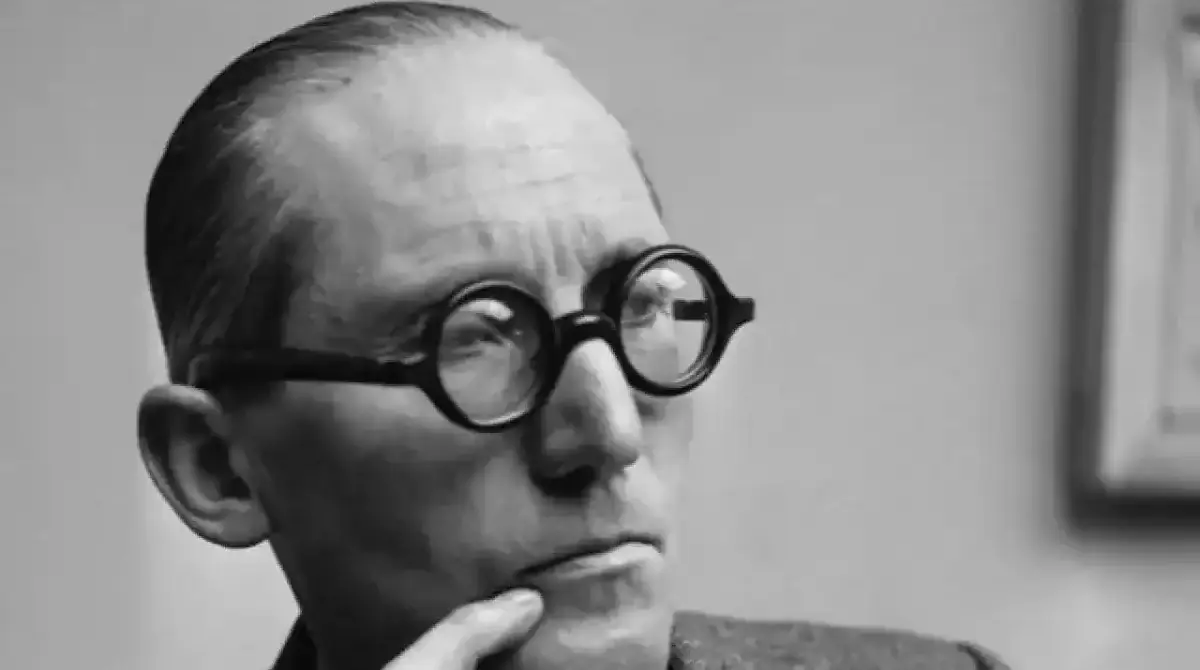
Le
Corbusier, whose real name was Charles-Édouard Jeanneret, was a French-Swiss architect of the
20th century (1887-1965).
He belongs to the architectural movement of brutalism.
The Bauhausstrongly influenced his ideas.
Although he can be controversial, Le Corbusier remains a major figure in architecture for his ingeniousness.
Architecture is the starting point for those who want to lead humanity towards a better future.
His principles
In Le Corbusier's architecture, specific principles can be found. They are called the"Five Points of a New Architecture":
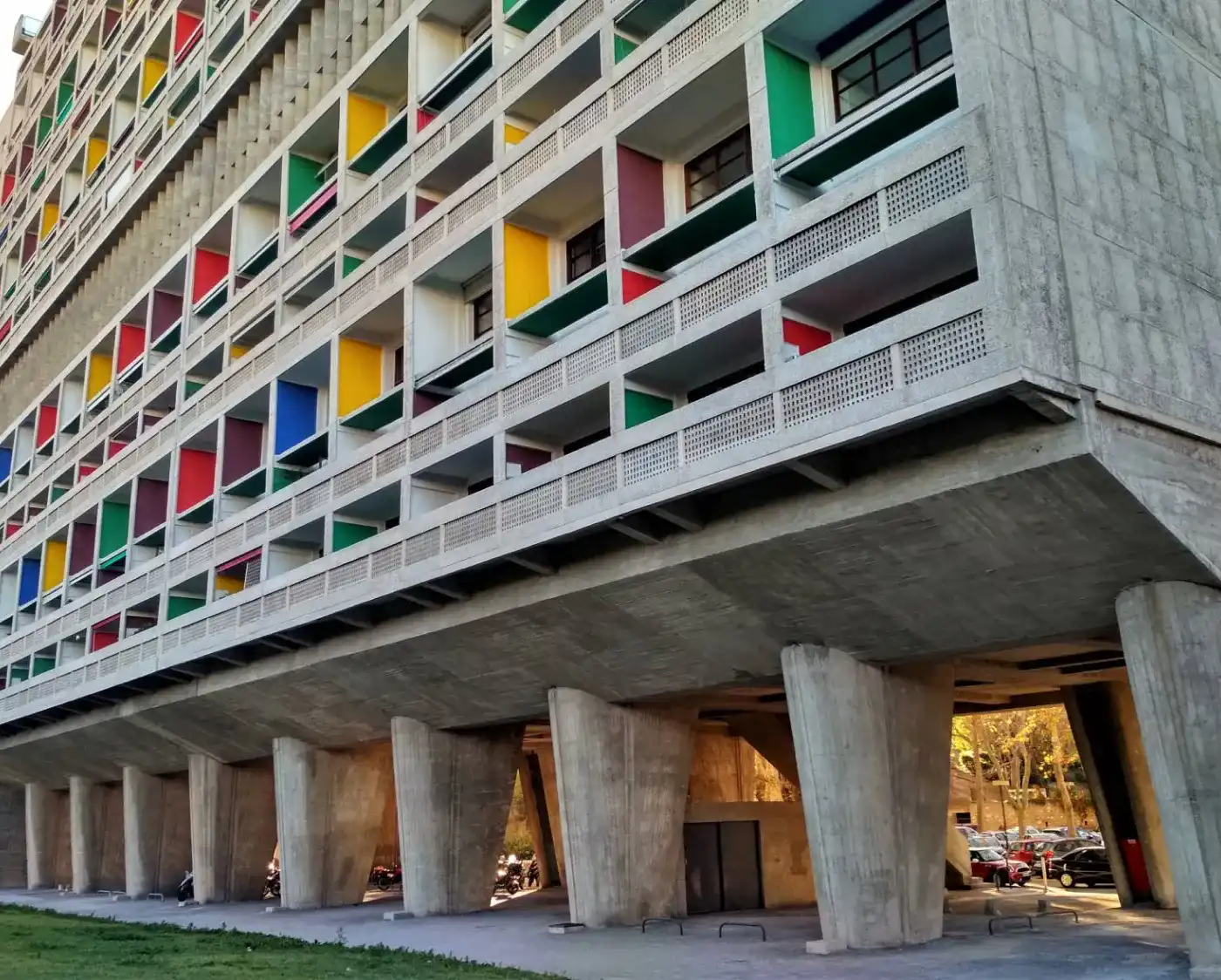
- The elevation son piles,
- The flat roof terrace,
- Large horizontal window,
- The suppression of load-bearing walls,
- The free design of the façade.
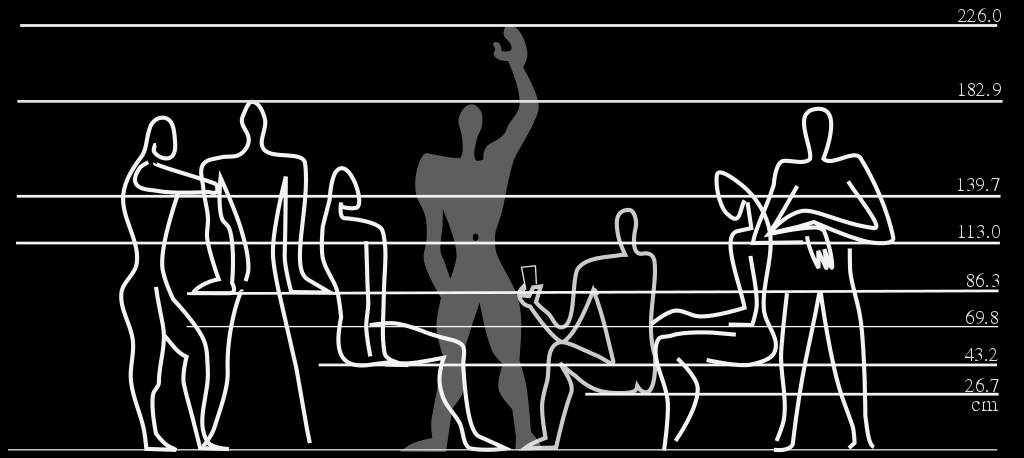
Another important principle is the Modulor. It is a human silhouette of standard size that Le Corbusier used to design furniture, structure of homes and the building as a whole.
According to Le Corbusier, the building discussed in this article is a "Housing
Unit". He conceived it as a "machine
for living".
Indeed, he adheres to the principles of functionalism,
the fact that a building must be free of unnecessary decorative elements.
Its construction exists only to respond perfectly to the need to live.
The characteristics of the structure
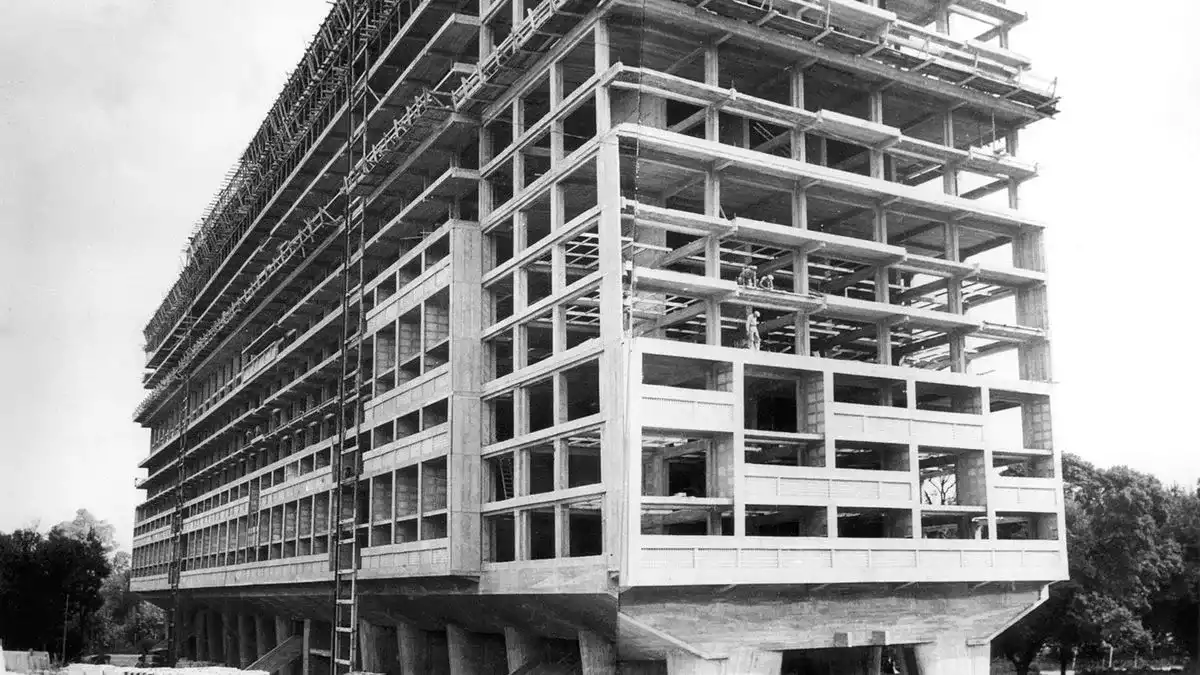
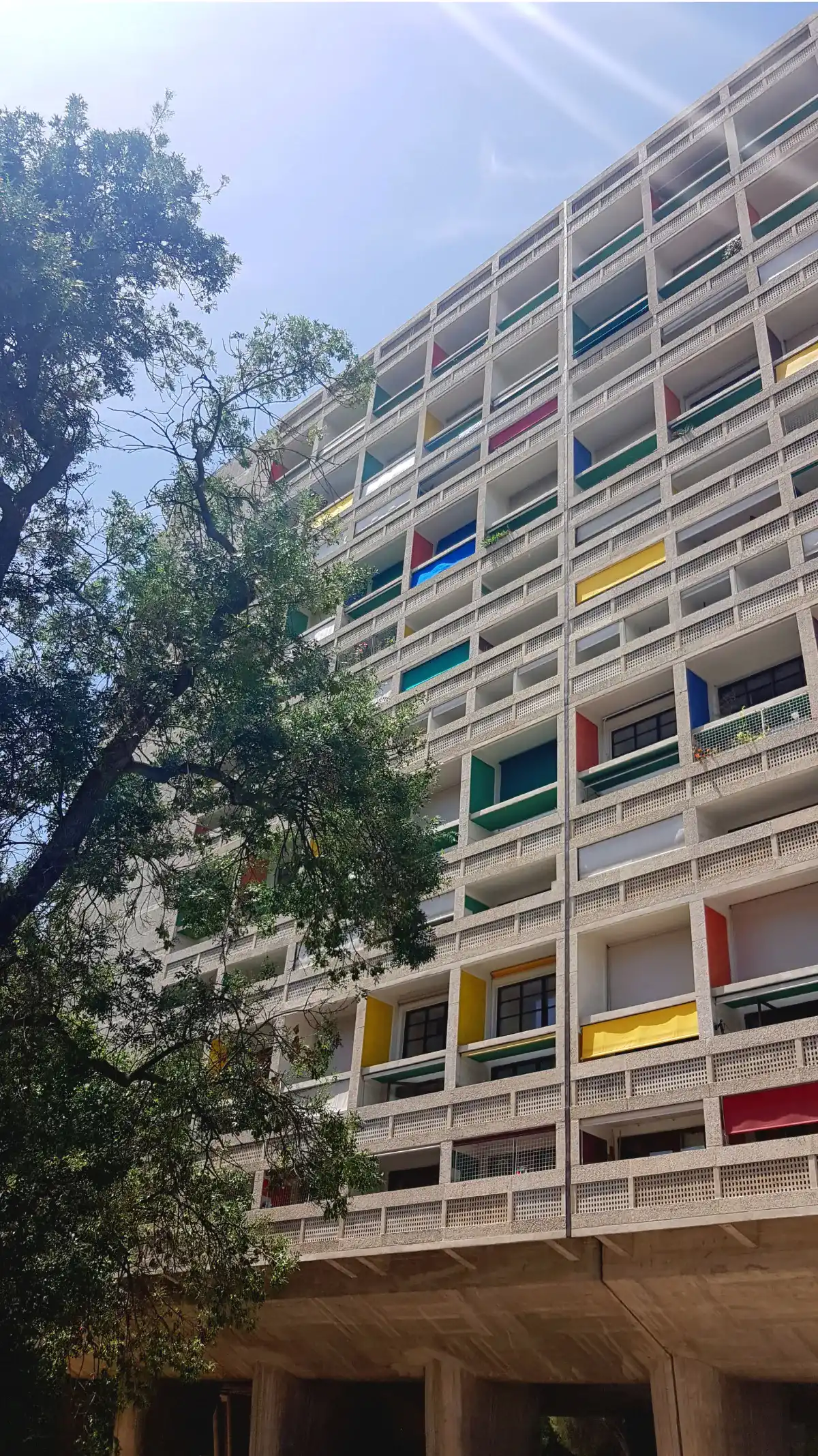
The Cité Radieuse was built quite quickly, between 1947 and 1952. It is located in the 8th district of Marseille, on the Boulevard Michelet.
Rather imposing, the building is 450 feet long, 184 feet high, and 79 feet wide. The concrete structure is mounted on a double row of piles. This paradoxically gives it a light yet massive appearance.
The building houses more than 300 apartments of 23 different types, on 9 floors. The majority are duplexes, so there are actually 18 levels. There are also real streets inside, with various services and shops.
Outside, around what its inhabitants call the "Autonomous Vertical Village", there is a 5 acres park.
Modular living spaces
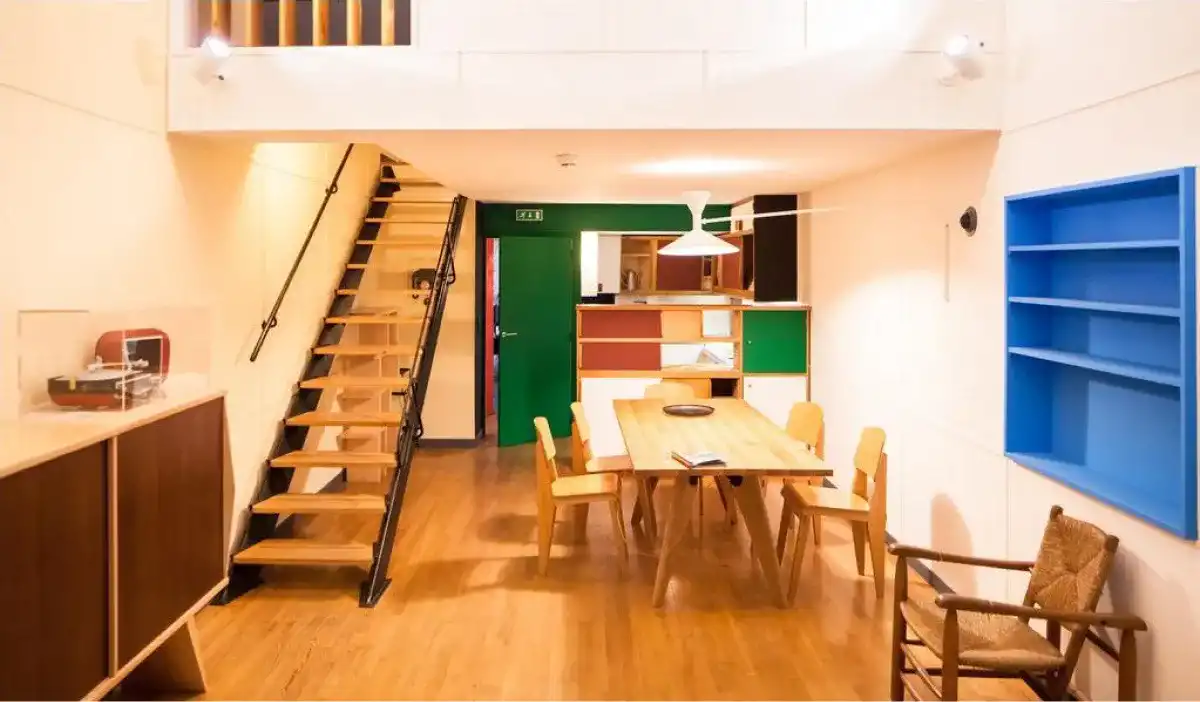
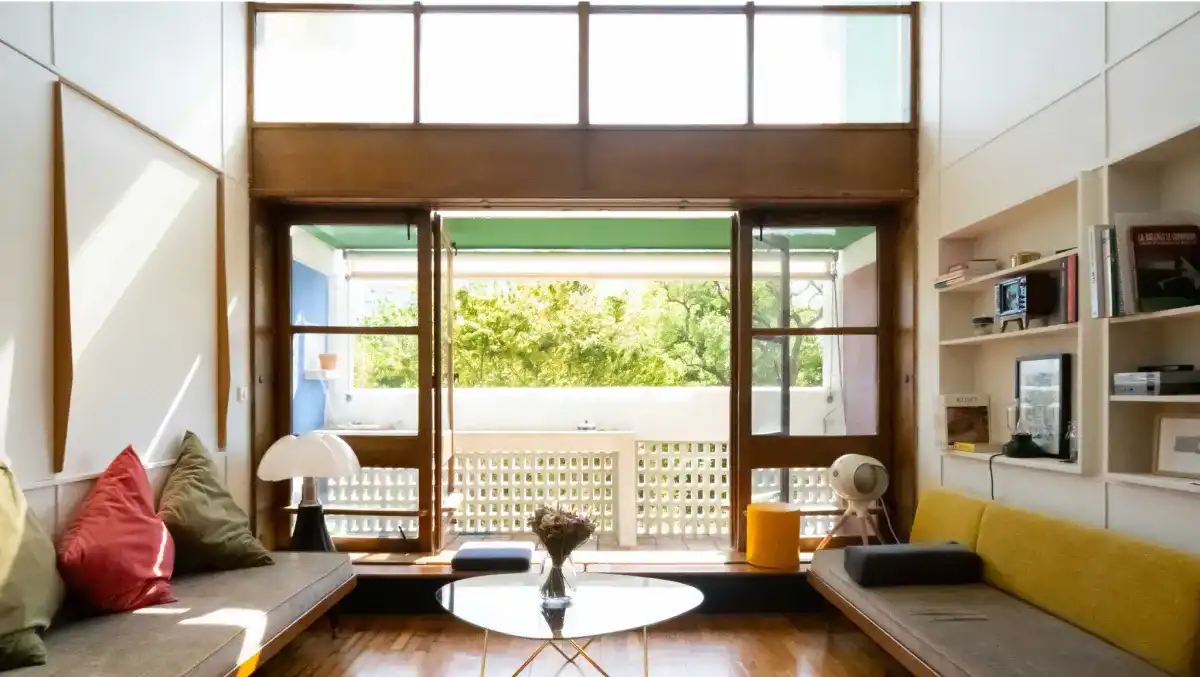
In this singular place, space is quite limited. The apartments are therefore modular, notably with the help of sliding panels, to adapt the surface to the use of the inhabitants. Everything is designed to be functional, comfortable, and always with a refined design.
Ergonomics is the key word of Le Corbusier. He used his Modulor system to adapt the interior architecture to the human being. The rooms are intelligently arranged, there is plenty of storage space. We see the first fully equipped kitchens appear. The apartments also have a loggia.
The different floors and their particularities
In the entrance hall, we can see small windows made with transparent and colored glass blocks. We can also see the elevators with red and yellow doors that invite us to access the upper floors.
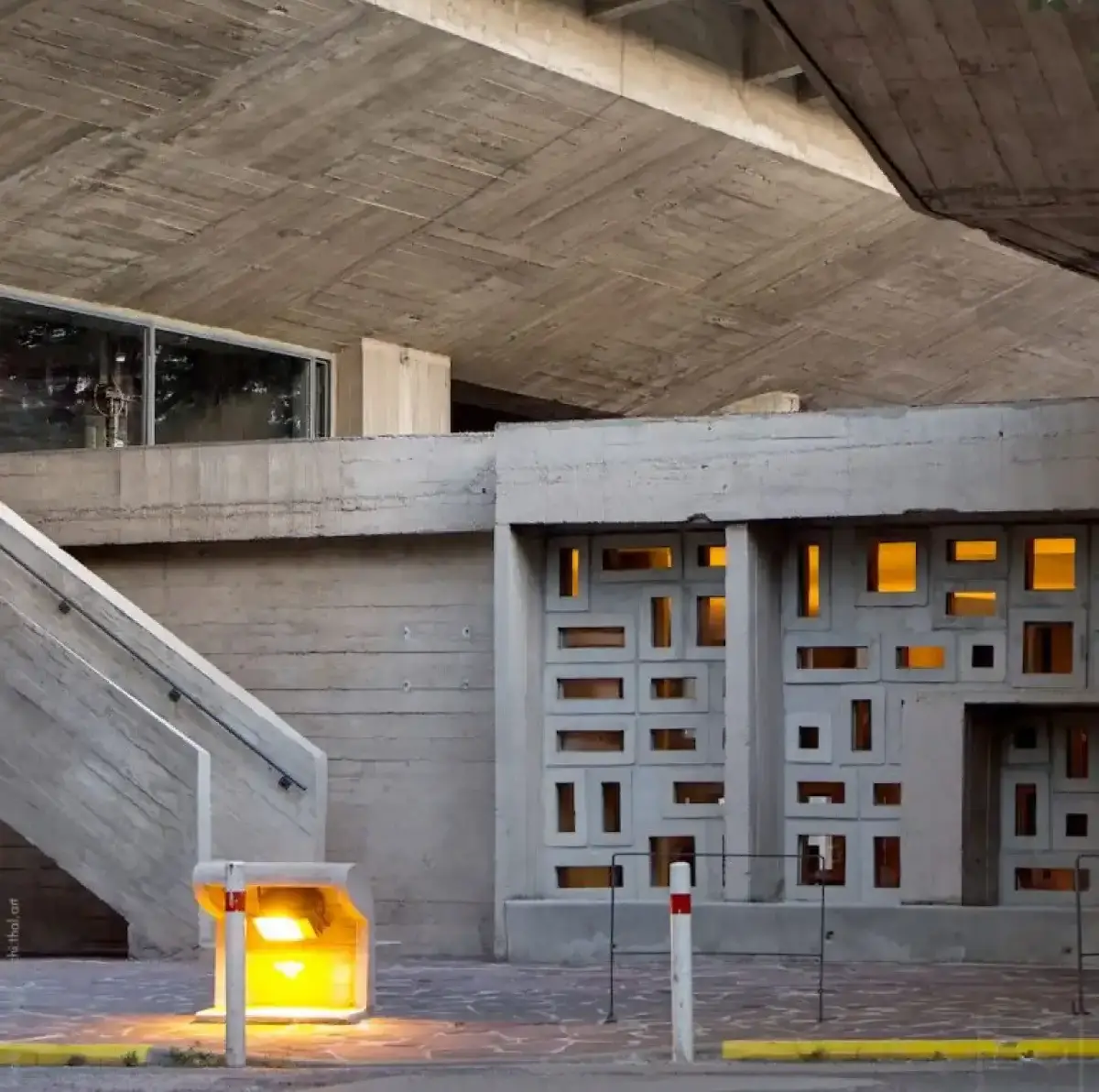
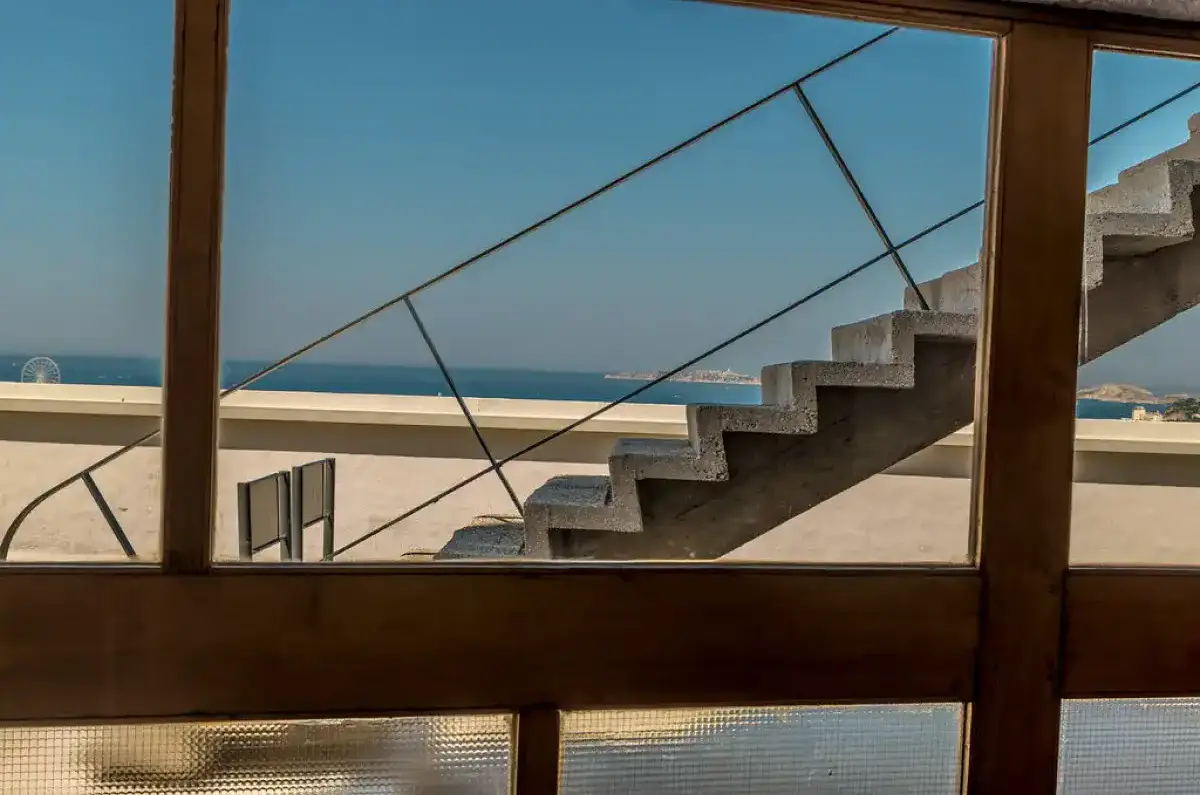
When we arrive in the 3rd street, there are offices (doctors, designers), a concept-store, a child daycare. A concrete bench runs along this bright corridor, with a view on the sea few miles away. A short staircase leads us to the 4th street, where there is a hotel-restaurant, a bookshop, and other stores.
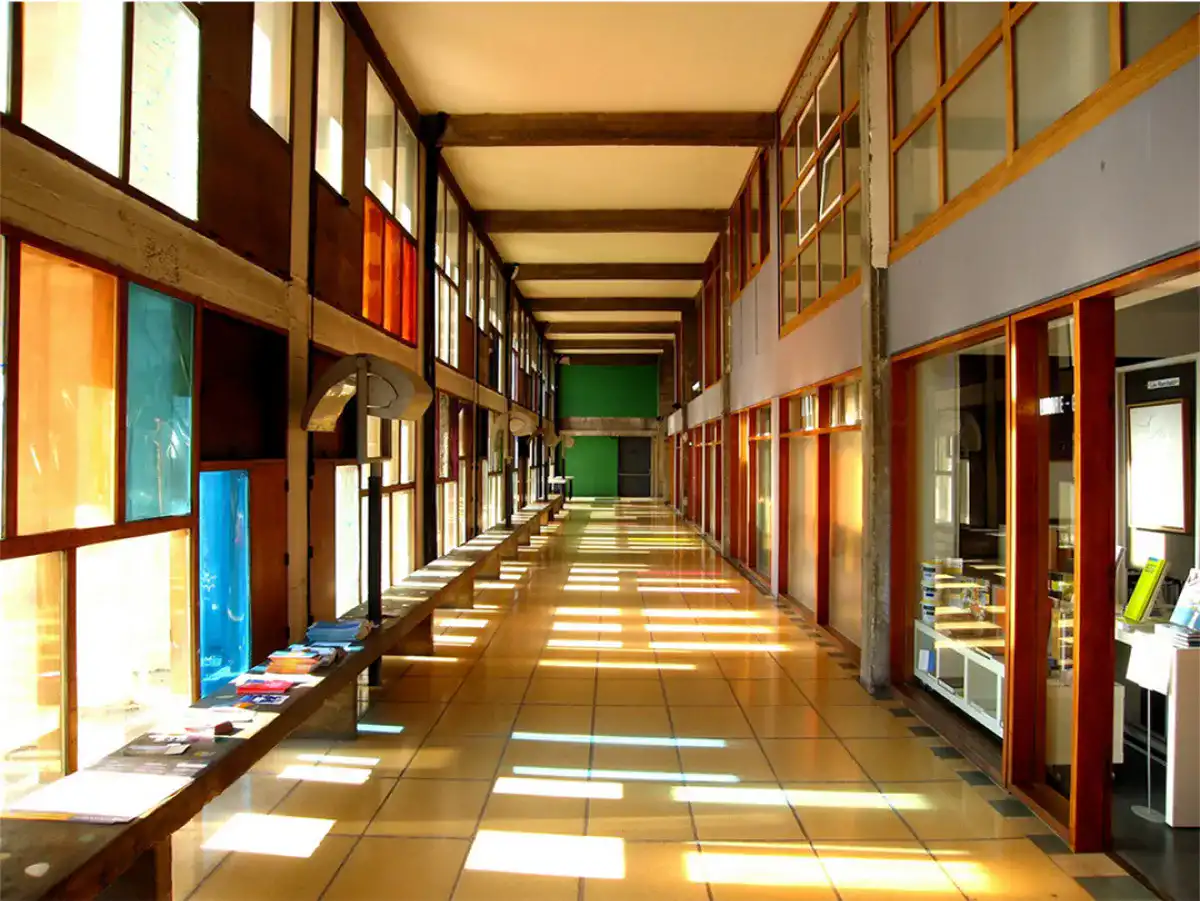
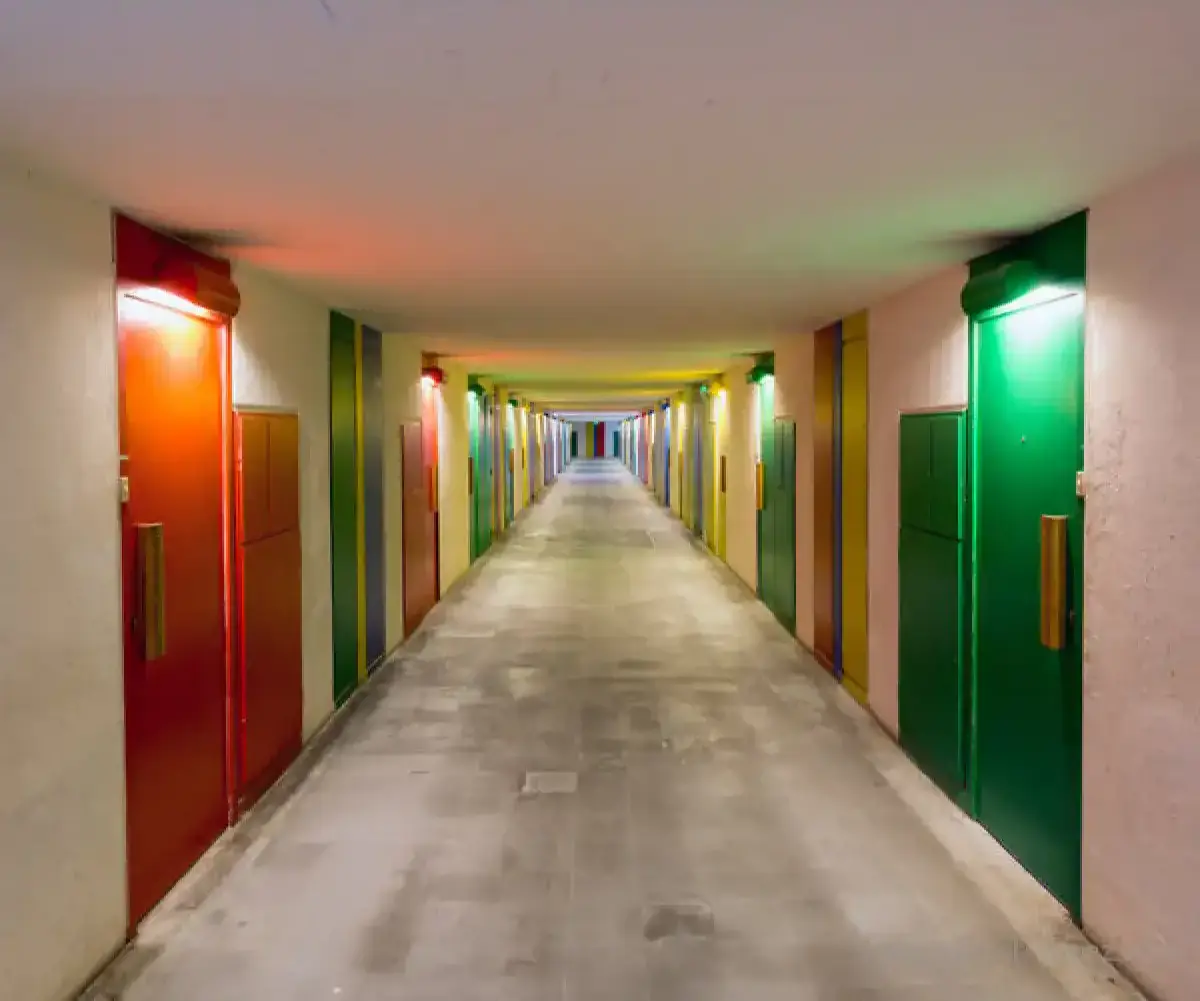
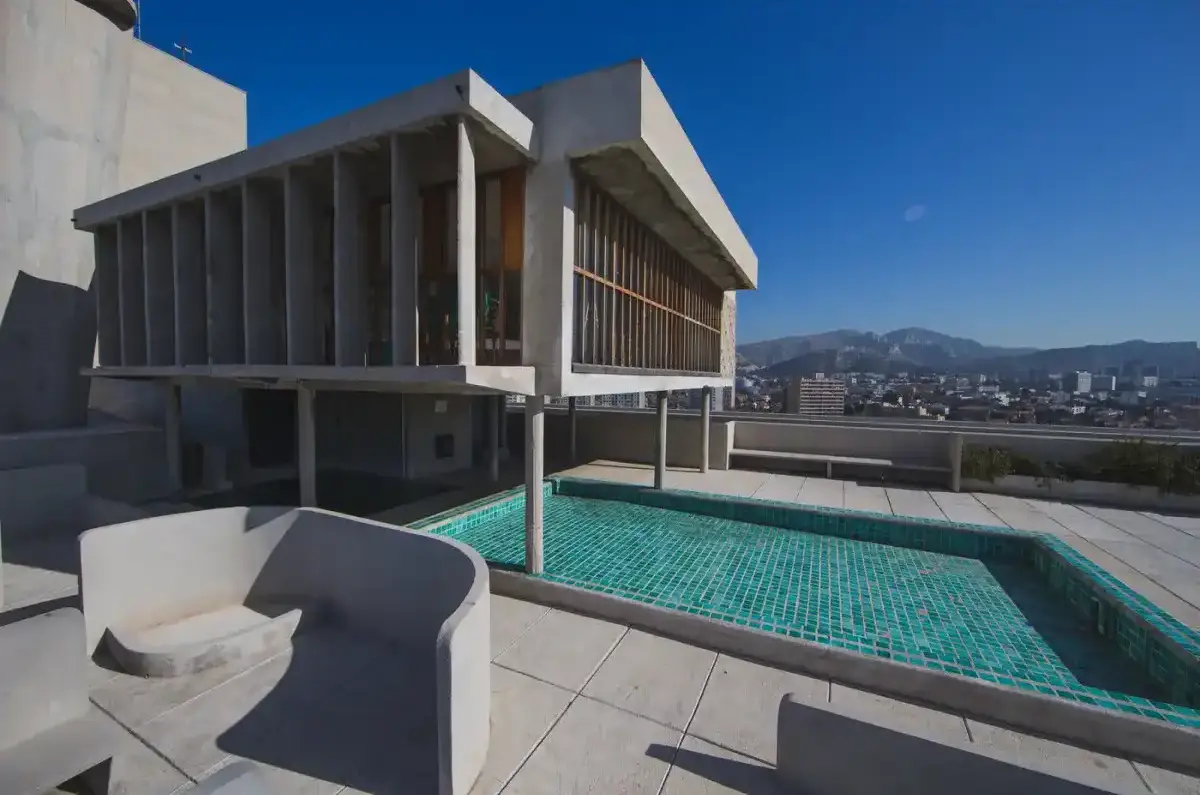
On the 9th floor there is a kindergarten. On the roof, a gymnasium, an athletic track, and a paddling pool. Since 2013, the gym has become the MaMo (Marseille Modulor). The French designer Ora-Ïto is behind this contemporary art exhibition space.
From the roof, the landscape is panoramic, you can observe the sea, the city and the surrounding hills.
An emblematic place
In 1995, La Cité Radieuse by Le Corbusier was classified as a historical monument. Today, it is the third most visited monument in Marseille.
For a long time, it was nicknamed "La Maison du Fada”, which means the House of the Mad Man, because Le Corbusier had a very avant-garde vision for the 1950s.
Nowadays, the Cité Radieuse is appreciated for its true value, and its inhabitants are delighted.